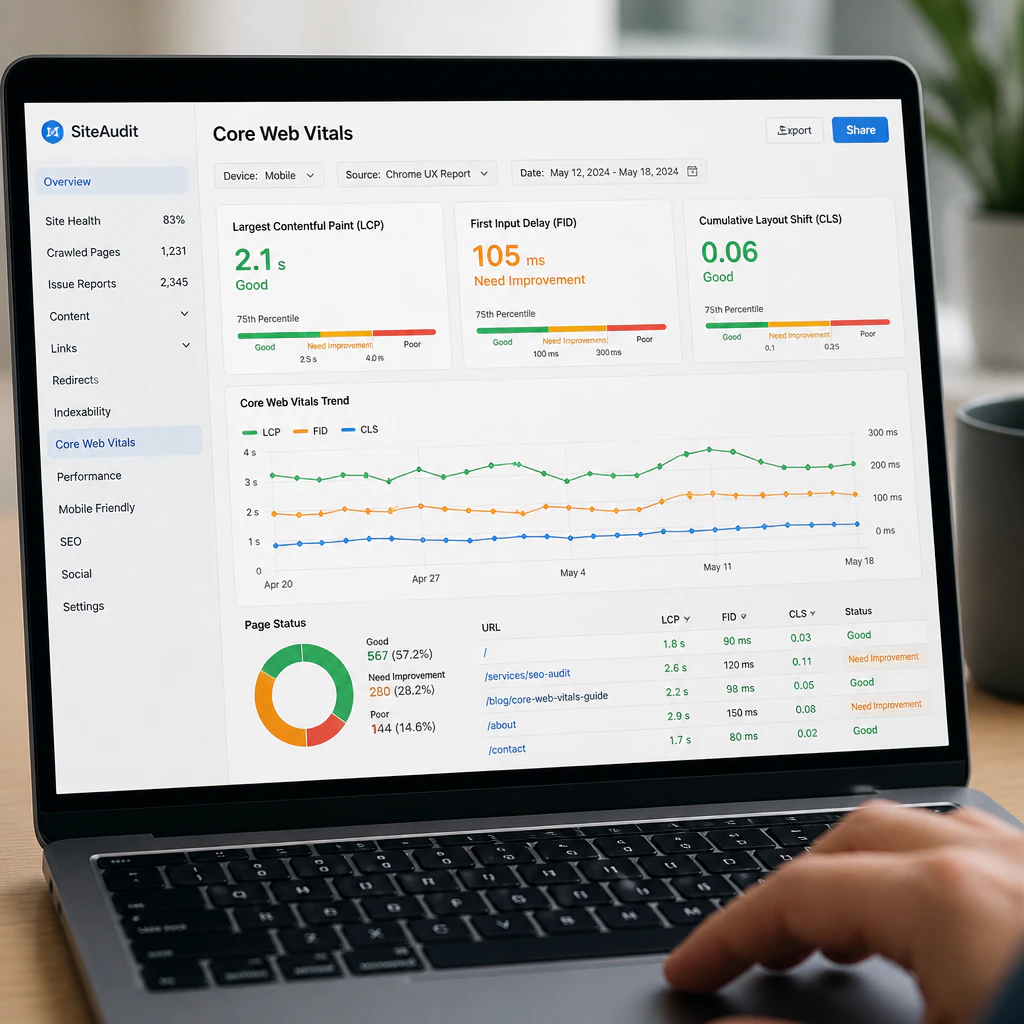
A business owner had once looked at his/her web traffic and was excited to see hundreds of visitors every day. Several weeks later, though, the sales had not been stirred. The traffic was present, but not the results. This is also among the most popular enigmas of digital marketing nowadays.
Have you ever wondered why your website is not functioning, yet it appears to be busy? You are not the only one. Online, most companies find it difficult to keep track of what is really working. This is simply because sometimes it is explained by one fact alone: numbers are not everything.
That is the point of intersection between Google Analytics and SEO. When they are used properly, they tell you not only the number of people that visit your website, but also the reasons why they visit, what they do when they do visit, and how you can turn them into long-term customers.
 The Importance Of Monitoring The Success Of A Website
Your website is your online shop. This is usually the initial encounter that possible customers have with your business. However, without knowing how the end-users navigate and locate your site, all marketing activities are guesses.
Here’s why tracking matters:
- Metrics guide growth. Without being able to quantify performance, you cannot enhance performance.
- User activity shifts daily. The tendencies, keywords, and taste change every day.
- Competition is fierce. Companies that monitor and streamline tend to do well compared to their counterparts that do not.
Using search engine optimization and Google Analytics, you are in a position to get a full picture of the performance of your site, traffic, and conversion. It is as though you turn on a switch in a dark room: now you can see what is going on and what must be worked on.
The Basics Of Google Analytics: The Language Of Understanding.
Google Analytics is a free service that follows and records the interactions of people with your site. It tracks the referrers and landing pages, and the time they spend on each page.
As you sign in to your Google Analytics account, you can track:
- The origin of people (organic search, advertisements, referrals, or social media).
- Which pages are the most visited?
- The duration of stay of the people (bounce rate).
- What they do is register, click, or buy.
This is the tool that renders your site an examinable mechanism. You do not ask yourself whether your content is working or not; you are aware.
The Relationship Between SEO And Google Analytics.
SEO will raise visibility, where Google Analytics is used to monitor behavior. The two are complementary to each other.
SEO makes your site rank top on Google, which will redirect organic traffic of people who are in need of what you show. After that, Analytics follows the behavior of those people once they come.
Such is the cooperation of SEO and Analytics:
- Find Opportunities: Analytics determines pages that have many views and not many conversions, i.e., they have to be optimized in SEO.
- Measure Progress: Once you have made changes to SEO (such as changing your keywords or adding schema markup), Analytics will tell you whether or not your search traffic and engagement increased.
- Refine Strategy: They allow you, as a group, to track what keywords and searches or landing pages provide results.
The outcome? More intelligent marketing choices on actual grounds, rather than assumptions.
Taking Advantage Of Google Analytics
The other half of search engine optimization is the optimization of your site; it is, however, the other half to know how well that optimization is working. It is where it is so convenient to be an SEO and use Google Analytics. It provides you with a behind-the-scenes view of how people are exploring and engaging your site and informs you on what you are doing well and poorly, as well as where you can sharpen up.
By acquiring the skills of Google Analytics, you will be able to tie your efforts at optimizing search engine results to tangible deliverables, and what raw search numbers entail in informative information that is useful. The following are the procedures for doing it.
1. Monitor Organic Traffic
Under the Acquisition Reports section, there is the percentage of traffic that came to your site through the search engines. This shows how effective your SEO campaign is in attracting visitors.
2. Monitor Landing Pages
Identify the pages that are receiving search traffic. Will the users go where they want to go? High bounces may be a reflection of content incompatibility or technological problems in the search engine.
3. Searching Track Queries And Keywords.
Add Google Analytics to Google Search Console. This relationship displays what you are saying that will lead users to your site, the average position, and what impressions you have.
4. Set Up Goals And Conversions
Define what is considered to be successful: downloads, sign-ups, or sales, and measure it. Google Analytics allows you to monitor the conversion rates in order to understand which SEO activities lead to their realization.
5. Use Annotations And Alerts
It is better to add notes (annotations) whenever you perform some significant changes on your site, such as changing the keywords or adding new content. Alerts will alert you when the traffic drops abruptly so that you can correct the problems on time.
6. Track 404 Duplicates and mistakes.
Problem pages can be identified by analytics where the visitors leave. Fixing broken links and duplicated pages will enhance the usability and general search engine optimization of your site.
7. Examine User Behavior Flow
This is a visualization of the way people visit your site. Their browsing behavior can be viewed to gauge whether they are accessing the most valuable pages or not.
SEO is no longer a guessing game with the use of Google Analytics. The quantifiable assets include your keywords, queries, and landing pages, and they can say something about your visitors and the success of your site.
Consistency is actually a strength, as it is sometimes done to review data, make small, informed adjustments, and see what impact those adjustments have had on your visibility and conversions.
That continual adjustment, over time, however, also makes your analytics dashboard not a tool of absolute reporting, but a guide to long-term SEO achievement.
The Impact Search Data And Intent Have on SEO
Being aware of the search intent, the reason behind each search, can change the way you do it.
An example is an individual who is searching best running shoes would be seeking reviews and not a purchase page. Producing fit content creates trust and takes visitors a step closer to conversion.
Intent hints are also revealed by Google Analytics as:
- Site Search Data: What On-site search box?
- Time Length: The longer the time they spend on the site, the more likely it is that the content of the site is relevant to their purpose.
- Exit Pages: This is where your users leave your site, and this is also a lost opportunity.
These insights will enable you to optimize content or change the order of the navigation, or reorient the search engine priorities. It must all be aligned with the way actual human beings search, such as design as well as keywords.
The Use Of Google Analytics In SEO Gives You Better Results
All website owners desire increased visibility, and not everybody resorts to the use of analytics. Google Analytics enhances your SEO campaign in the following way:
- Refining Keywords: It tells you what search words will bring quality traffic.
- Optimization of Pages: It displays the best-performing URLs to enable you to use them as models for new content.
- Increasing the Low Bounces: The statistics of user behavior will give you an idea of whom you can no longer keep.
- Increasing Conversion Rates: Monitoring forms, calls, and sign-ups will indicate which CTAs or designs perform.
- Optimizing the User Experiences: You can A/B test the nav, design, or content changes according to the user flow data.
When you combine the SEO strategy with the real-life analytics, there is a purpose behind every optimization, and all of them can be measured.
Typical SEO Problems that Analytics Will Uncover
There are even good websites with strategic or technical issues. Some of them are made transparent in advance by Google Analytics, e.g.:
- Duplicated content pages or poor organic traffic.
- Sluggish loading of pages that are not user-friendly.
- Lacks absence of organized information, which restricts search visibility.
- Crawl has been compromised by 404 errors and broken URLs.
- Non-converting landing pages that receive clicks.
With these issues resolved, you improve the SEO health of your site and prepare it to work better in the long run.
In case you are an entrepreneur interested in mastering it, Google has Analytics Academy courses that are a great place to start. They talk about how to monitor, analyze, and improve the performance of the sites.
The online world evolves very quickly. One thing that works this quarter might not necessarily work the following quarter. Periodically reviewing your analytics reports helps you remain flexible to change content, campaigns, and SEO activities when trends change.
 Smarter SEO Starts With Data
Measuring the success of a website is not just about having the figures. It is related to your familiarity with people, their actions, interests, and motives of using your brand.
SEO attracts the right traffic to your site. Google Analytics shows the next thing they do. Together, they create a whole feedback loop that informs you of where you are doing well and where you can work even harder.
Each click, keyword, and conversion has its story. Listening to that data, you can see clearly and have more confidence in your marketing decisions. That is how you get yourself out of wondering what is working to knowing how to grow.
You do not have to keep a secret to make your site successful. It only takes the correct tools and the determination to make good use of them.
Greener data delivers greener growth. With Google Analytics, make better decisions about your SEO and improve with every insight. Get in touch with us today to discover how our professionals can take action on analytics.