Have you ever created a website and assumed it would bring in traffic automatically? You are not alone. Many companies believe that as soon as a site is online, people will begin to visit it. The truth is that the majority of websites just sit there with little to no traffic because they are not visible where it matters most.
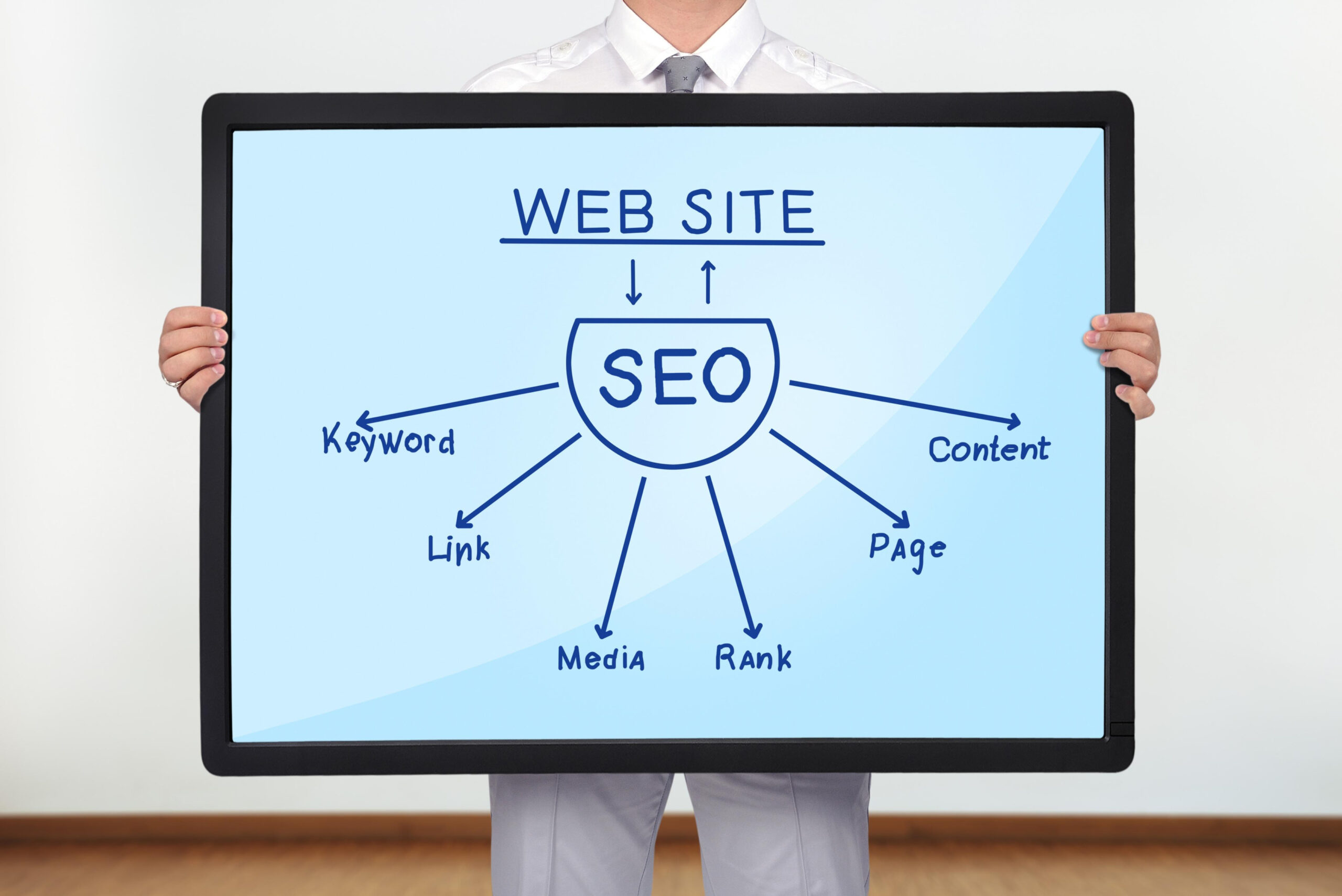
Search engine optimization (SEO) involves making your site more visible in search engines, so that when someone searches for what you offer, your site will appear in the search results page. It encompasses both what is on your site and the technical framework of your site. When properly done, it generates steady organic search traffic without relying on paid advertising.
GOA-TECH is a digital marketing firm that has over 30 years of experience helping companies to enhance their presence in search using effective SEO. We focus on simplifying websites so that they are more accessible and readable by users and search engines.
This guide takes you through the steps of optimizing your website with regard to SEO. It does not matter if you are a beginner or you are trying to optimize an existing site, these are the fundamentals that drive real results.
 Step 1: Find Out What Search Engine Optimization Is Really Doing to Your Website
Google and other search engines use automated processes that crawl the web and index it. They scan your content, follow links, and store that information so it can be retrieved when someone performs a search. This process determines how your site will be crawled and indexed by search systems and its ranking position in the search results.
When a person is searching for something, the engine ranks pages with relevance, quality, and usability. That is what defines your place in search engines. Research from Backlinko found that the first result in Google’s search results has an average click-through rate of 27.6 percent. This is a drop that happens fast as you scroll down the page. In practical terms, your position in search results directly determines how much traffic your site is going to get.
SEO is not just about optimization.The aim is to enhance its search visibility to ensure the targeted audience can see you before they see another individual.
Step 2: Before You Make Changes, Start With The Right SEO Tools
Trying to improve SEO without data usually leads to wasted time. Install tools to display the current performance of your site before you start making any changes to a particular page on your site. These are the tools that can assist you in viewing how your site looks on Google search and how users navigate through the site.
The most important tools are:
- Google Search Console is a service that gives you information on how your site is being indexed and the queries being made by searchers to get to your site.
- Google Analytics, which monitors behavior, interaction, and general search traffic.
- Google Keyword Planner is a keyword tool that aids in the identification of search keywords that are relevant.
Combined, these tools provide you with a clear vision of your site in terms of SEO. With this information, you can take a more targeted approach. You can work on what needs to be improved, rather than speculating about what may work.
Step 3: Research search terms your audience is using
Keyword research is the starting point of an effective SEO strategy. It links what people are typing into web search and the content on your site. Unless these two things are matched up, your pages will have difficulty being found on search engine results pages, no matter how well they are constructed.
Begin by considering how your audience searches. Then grow that list with the help of tools like Google Keyword Planner.
When you create your list, watch the search intent:
- Informational searches (people learning something)
- Navigation searches (users looking for a specific brand or website)
- Transactional searches (people willing to act)
It is important to balance general and specific keywords. Even lower search volumes can result in more qualified traffic by using more specific phrases. Once this step is done correctly, it becomes easier to get the rest of the SEO process in place, as all your content becomes based on what people already need.
Step 4: Improve Your Pages With On-Page SEO
The next thing you will need to do after knowing your keywords is to apply on-page SEO to your content. This is where you arrange your pages in such a way that they can be easily understood and ranked by search engines like Google.
On each page of your website, you have to have:
- A brief title stating the topic.
- Clear heading structure (H1, H2, H3).
- Information that directly answers the main question.
- Internal links between related pages.
Moreover, there are several practical enhancements that do make a difference:
- Use descriptive alt text for images
- Keep URLs short and readable
- Do not attempt to put too many subjects on a single page.
When you write, concentrate on clarity. The keywords need to appear naturally in your content, not forced. This is one method of making people and search engines comprehend your content simultaneously, which is the goal of effective SEO.
Step 5: Fix the Technical SEO Issues That Limit Performance
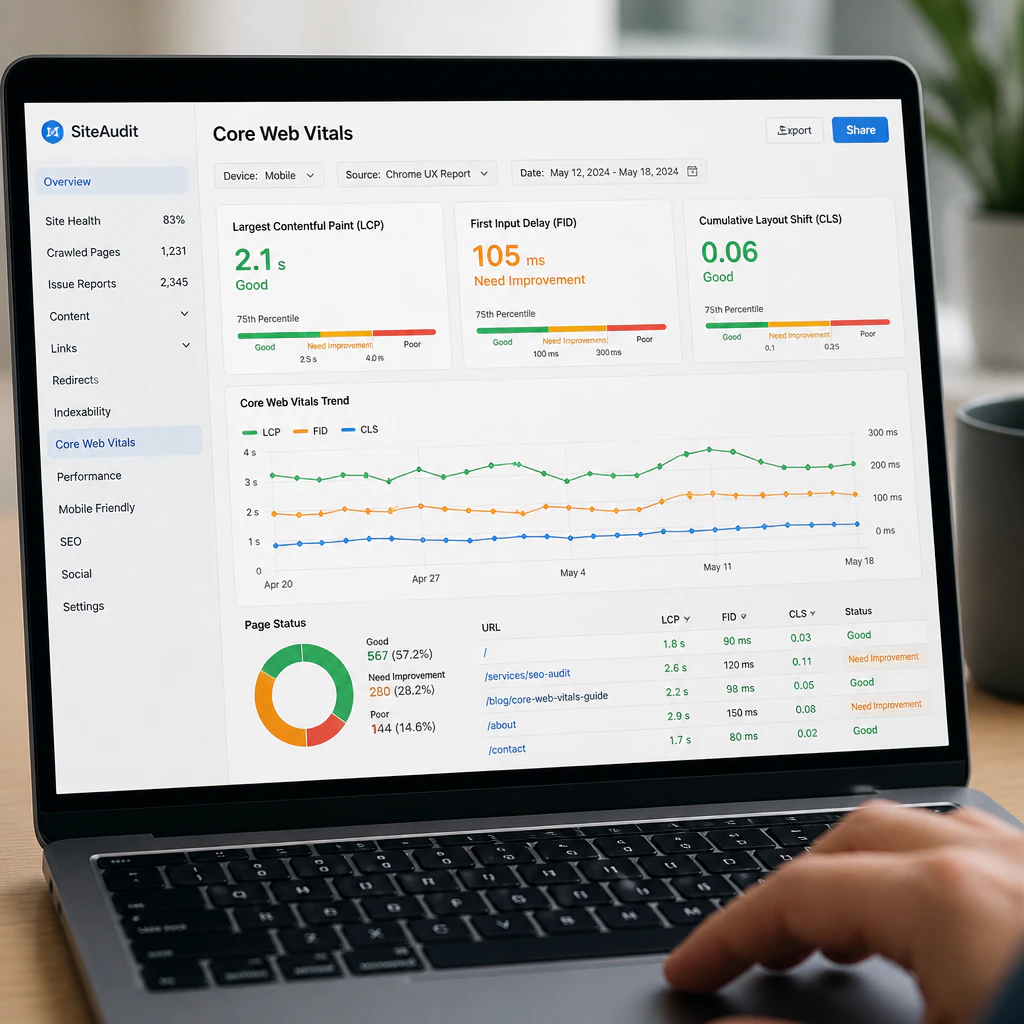
Your site can’t rely on content alone when there are underlying technical issues. Technical SEO is concerned with the way your site is constructed and whether it can be read properly by the search engines. When your pages cannot be accessed or take ages to load, this impacts user experience and search engine ranking.
Common technical SEO issues include:
- Unindexed pages in search engines.
- Missing links that interrupt navigation.
- Poor page speed.
- Duplicate titles or content.
- Sluggish mobile performance.
Such tools as Google Search Console or PageSpeed Insights can assist in detecting these issues. With these issues resolved, you make your site easier to read by the search engines and ensure that your content has a reasonable chance of ranking.
Step 6: Establish Authority Of Your Website
SEO is more than what happens on your site. Search engines also consider how other websites interact with yours. It is one of the biggest components in the SEO industry and has an important role in site ranking. The fact that other trusted sites are also linking to your content is an indication of credibility and power.
The practical ways of establishing authority include:
- Creating valuable content that could be used by others.
- Posting articles to the appropriate websites.
- Getting on professional directories.
- Making mention through affiliations or exposure.
This kind of activity helps to promote better ranking in search results in the long run. Shortcuts such as purchasing links or taking part in link schemes should be avoided. These are capable of producing long-term SEO issues that are hard to resolve.
Step 7: Track Results and Continue Improving
Search engine optimization for websites is not a one-and-done process. The search engines keep on updating their systems, and competitors are constantly improving their websites. To stay in the same position, you have to work for it.
Periodically analyze your data with applications such as Google Analytics and Search Console.
Pay attention to:
- Organic search traffic changes.
- Pages that increase/decrease in visibility.
- The appearance or drop of the keyword rankings.
One of the most effective methods of enhancing a site’s performance is regularly updating content. Minor modifications, such as making the structure better or the addition of more up-to-date content, may result in better returns. Monitoring your performance will keep your SEO in line with actual performance, not guesses.
 Create a Site That Performs Well in Search Engines and Attracts the Right Traffic.
Search engine optimization is the process of improving your site’s visibility, accessibility, and rankings. When properly managed, it draws in a continuous stream of traffic without necessarily having to rely on paid advertisements.
Completing these steps will help you get a better idea of how your site is doing and what it should take to be better. Part of the work is easy, particularly at the content level. Other sections, especially technical SEO and continuous optimization, get more complicated as your site expands.
If companies need practical advice and implementation in all key areas of SEO, GOA-TECH offers high-quality consultancy and implementation. Our strategy is focused on measurable improvements in search visibility and long-term performance.
When your site is not performing as well as you thought it was going to, the issue may not be your business. It could be how your website is positioned in search engines. Fixing that is what turns a website into a reliable source of growth.