If you have ever wondered why your website doesn’t show up when people search for what you offer, the answer is almost always the same: your site has not been optimized for search engines yet.
Search engine optimization (SEO) is the process of making changes to your website so that search engines like Google can understand it better, rank it higher, and show it to more of the right people. It covers everything from the words on your pages to the technical structure underneath them. Done consistently, SEO builds lasting organic search traffic without requiring an ongoing ad spend.
GOA-TECH is a Miami-based digital marketing agency with over 30 years of experience helping businesses build their online presence through SEO and web strategy. If you find yourself wanting a professional to take the reins at any point, they are worth a look.
This is a practical, step-by-step guide written for website owners who are ready to take SEO seriously, whether you are just getting started or picking it up after letting things slip.
 Step 1: Understand What SEO Is Actually Doing for Your Site
Before making any changes, it is worth understanding what you are working toward and why it matters. Search engines use automated crawlers to scan web pages across the internet. They read the content, follow internal and external links, and store everything in a massive index.
When someone enters a search query, the engine pulls from that index and ranks results based on hundreds of signals, including relevance, site authority, page speed, and user experience.
According to research cited by Study Country, 75 percent of users never scroll past the first page of search results. That single number explains why search engine ranking matters as much as it does. If your site is not on the first page for the queries your audience is using, it is effectively invisible to most of them.
Understanding this helps you prioritize. Every SEO decision you make is ultimately about improving your visibility in search results so that the right people find your site before they find a competitor’s.
Step 2: Set Up Your SEO Tools Before You Do Anything Else
Trying to optimize a website without data is like driving without a map. Before you touch a single page, get the right free SEO tools in place.
Google Search Console is the single most important tool for any website owner working on SEO. It is free, connects directly to Google’s search index, and shows you:
- Which search queries are bringing users to your site
- Which pages are indexed and which are not
- Any crawl errors or technical issues Google has flagged
- Manual penalties and structured data problems
If you have not set up Google Search Console yet, do that first. It is the clearest window into how Google currently sees your site.
Google Analytics pairs with Search Console to show you what happens after someone arrives. You can see which pages get the most organic search traffic, how long visitors stay, and where they drop off. Together, these two free tools give you a solid foundation for all the decisions that follow.
For keyword research, Google Keyword Planner is a free starting point that shows search volume and competition data for specific terms. More robust paid options exist, but Keyword Planner is enough to get oriented when you are beginning.
Step 3: Do Your Keyword Research
Keywords are the bridge between what people are searching for and the content on your site. Getting this right is one of the most important parts of effective SEO, and skipping it means you may be optimizing for terms nobody actually uses.
Start by thinking about your audience. What would they type into Google to find what you offer? Write down every variation you can think of, including questions, short phrases, and longer descriptive queries. Then use Google Keyword Planner or a similar tool to check the actual search volume for those terms and find related ones you might have missed.
As you build your keyword list, pay attention to search intent. Not all queries mean the same thing:
- Informational queries (“how to”, “what is”) signal that someone is researching, not buying yet.
- Navigational queries include a brand or site name and suggest the user already knows where they want to go.
- Transactional queries (“buy”, “hire”, “get a quote”) signal readiness to act.
Match your content to the intent behind the query. A page built for a transactional keyword should make it easy to convert. A page targeting an informational keyword should answer the question thoroughly and clearly.
Focus on a mix of shorter, higher-volume terms and longer, more specific phrases. Longer phrases tend to have lower competition and often convert better because they reflect a more specific need.
Step 4: Optimize Your Content with On-Page SEO
Once you know what keywords to target, the next step is making sure your pages are structured in a way that helps search engines understand them. This is what on-page SEO covers.
Start with your page titles and meta descriptions. The title tag is one of the most direct ranking factors available. It should include your primary keyword and accurately describe what the page is about in under 60 characters. The meta description does not directly affect ranking, but it shows up in the search results page under your title and influences whether someone clicks. Write it to be clear and useful, not clever.
A few other on-page optimization tips worth following:
- Use descriptive alt text on all images so search engines can understand what they show.
- Keep URLs short, readable, and keyword-relevant.
- Link to other relevant pages within your own site to help search engines discover and connect your content.
- Make sure every important page has a clear, singular focus rather than trying to target too many topics at once.
Use headings (H1, H2, H3) to organize your content logically. Each page should have one H1 that includes the primary keyword, followed by subheadings that break the content into readable sections. This structure helps both users and search engines follow the page.
Throughout the body of your content, use your target keywords and related terms naturally. Write for the person reading the page first. Content that is genuinely useful, well-organized, and specific to the topic tends to rank better than content that has been keyword-stuffed but provides little real value.
Step 5: Fix Your Technical SEO Issues
On-page content only performs as well as the technical foundation beneath it. If search engines cannot crawl and index your pages properly, even excellent content will struggle to rank.
Run a technical SEO audit using a free SEO checker like Google Search Console or a tool like Screaming Frog’s free tier. Look for these common problems:
- Pages blocked from crawling by the robots.txt file or incorrect noindex tags
- Broken internal links that stop crawlers before they reach important content
- Slow page load times, which hurt both rankings and user experience
- Missing or duplicate meta titles and descriptions across multiple pages
- Pages that are not mobile-friendly, since Google uses mobile-first indexing
- Redirect chains that slow load time and dilute link authority
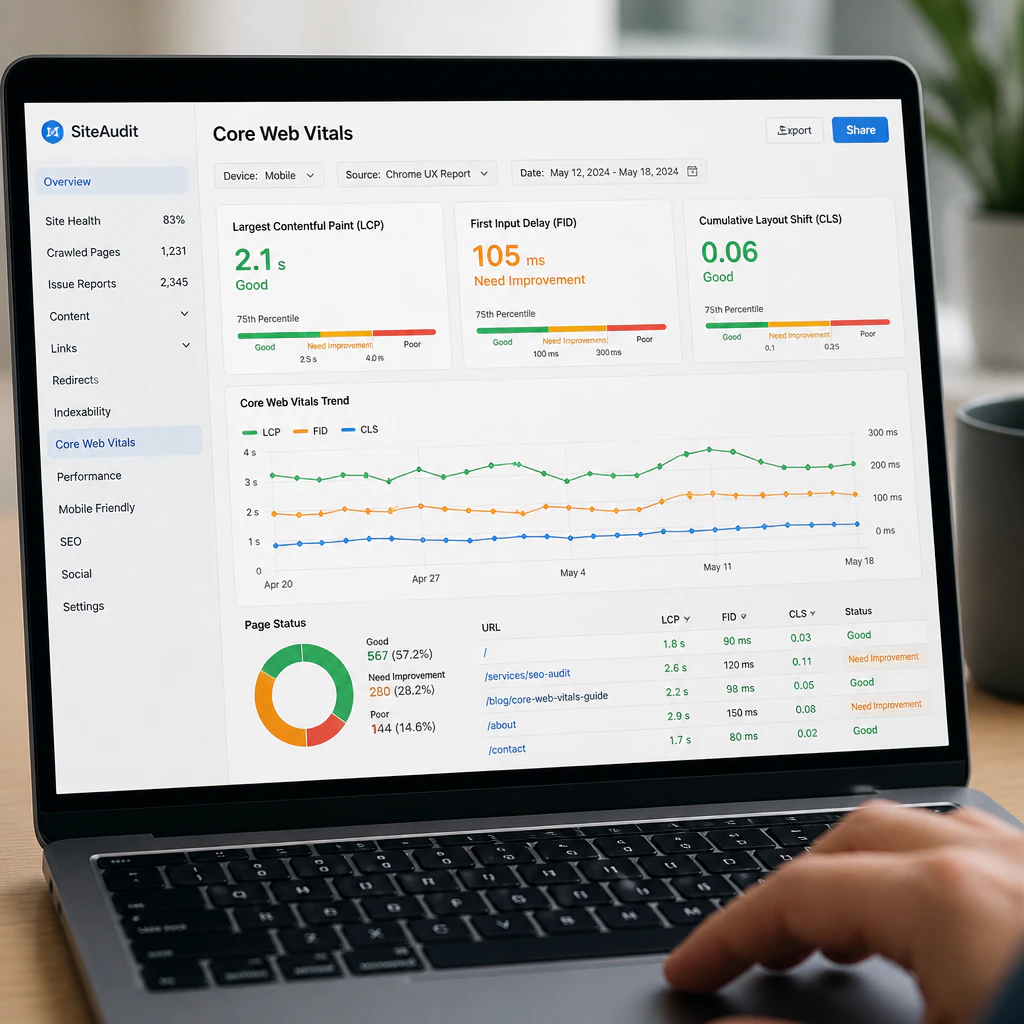
Page speed deserves particular attention. Google treats Core Web Vitals, a set of speed and stability metrics, as a ranking factor. Use Google’s free PageSpeed Insights tool to check your scores and get specific recommendations for improvement.
If your site runs on a content management system, many technical fixes can be made through settings or plugins without touching code. Others, particularly structural or server-level issues, may require a developer. Either way, identifying them is the first step.
Step 6: Build Off-Page SEO Through Links and Authority
Your site’s search engine ranking is influenced not only by what is on your pages but by how other websites on the internet treat your site. Off-page SEO, particularly link building, is how you establish authority in the eyes of search engines.
When reputable websites link to your content, search engines treat those links as votes of confidence. A site with strong inbound links from credible sources tends to outrank one with comparable content but little external recognition. This is especially true in competitive categories where many sites are targeting the same search terms.
Building links takes time and consistent effort. The most reliable approaches include:
- Creating genuinely useful content that other sites and publications want to reference
- Contributing guest articles to relevant industry websites
- Getting listed in legitimate directories and professional associations in your field
- Earning mentions and citations through press, interviews, or community involvement
Avoid buying links or participating in link schemes. Google’s search quality systems have become very effective at identifying manipulative link patterns, and the penalties can set a site back significantly.
For businesses serving a local area, local SEO is a related priority. Accurate and consistent listings in Google Business Profile, local directories, and review platforms all contribute to visibility in location-based searches.
 Step 7: Track Your Results and Keep Improving
SEO is not a project you complete once. Search engines update their ranking algorithms regularly, competitors adjust their strategies, and the way people search evolves. The sites that maintain and improve their rankings are the ones that keep paying attention.
Return to Google Search Console on a regular schedule. Check for new crawl errors, review which queries are gaining or losing impressions, and watch for any coverage issues that suggest pages have been dropped from the index. Catching problems early makes them much easier to address.
Monitor your organic search traffic trends over time. A gradual decline may indicate an algorithm change or a competitor gaining ground. A sudden drop often points to a technical issue on the site itself. Knowing which pattern you are dealing with determines the right response.
Revisit and update existing content regularly. Pages that were accurate when you wrote them may become outdated, and search engines favor fresh, current content, particularly on topics that change. Updating an older page with new information and improved structure is often more efficient than creating a new one from scratch.
Set concrete goals and measure against them. Improving your search engine ranking for a specific term is a meaningful milestone, but the deeper measure of SEO success is whether better rankings are translating into more qualified traffic and more of the outcomes that matter to your business.
Build a Website That Search Engines and People Can Trust
Implementing search engine optimization for your website is a step-by-step process. If you work through this guide, you will have a clearer picture of where your site stands and a concrete plan for improving it.
Some of the work is straightforward enough to handle yourself. Other parts, like a thorough technical audit or a sustained link-building strategy, get more complex as your site grows.
For those who want experienced support, GOA-TECH has been helping businesses with SEO and digital strategy for over 30 years. They are a practical resource if you want a professional perspective on your site’s current state or a team to take on the execution work. Their website is a good place to start.