Every business owner has felt it. That moment when you’re staring at a task list that never gets shorter, wondering how competitors seem to be everywhere at once. They’re posting on social, running email campaigns, optimizing their websites, and somehow still finding time to actually serve customers.
Artificial intelligence has moved well past the hype phase. Small and medium-sized businesses in Miami and across the country are using it to automate repetitive work, sharpen their marketing, and get more done without adding headcount. The question is no longer whether to use AI. The question is which tools actually work, and how to weave them into the workflows your team already uses.
GOA-TECH, the Miami-based digital agency behind services ranging from SEO and web design to social media and email marketing, works with clients across industries who are asking exactly that question.
This article walks through the categories where AI creates the most leverage for business owners, the tools that actually deliver, and the practical side of building AI into operations without a tech team.
 What “AI for Business” Actually Looks Like Today
You could sit through a marketing meeting for five minutes and still hear the “AI” buzzword come up again and again. The term is everywhere, and because of that ubiquity, “AI” is starting to mean just about nothing.
So let’s define it as clearly as possible. Most business uses of AI fall into three categories: creating content more quickly, automating routine tasks, or drawing out insights from data. All three of those categories have rapidly evolved over a short period of time.
In terms of content, AI-generated copy that previously felt unnatural or robotic has, with better prompts and human editing, become a strong first-pass content generator.
In the realm of automation, tools that once required developers can now be set up as no-code automation apps by non-technical staff.
As for the third category, data, analytics tools that were previously limited to data teams now present predictive insights in dashboards that a typical marketer can easily understand.
There is, however, one major caveat to note: AI is not a one-size-fits-all solution. There’s an inherent difference between the needs of a small agency and those of a large enterprise retailer. The right AI solution for your business is not the one with the most blog posts; it’s the one that solves a particular pain point.
The AI That’s Already In Your Subscription
One of the major assumptions of the AI revolution for business owners is that they need to buy new tools to handle these tasks. In many cases, businesses are already paying for these tools but haven’t used them yet.
The most obvious example is Google Workspace, where the AI assistant, Gemini, is integrated into all of Google’s core applications: Docs, Gmail, Sheets, Slides, and Meet. In Gmail and Docs, users can ask Gemini to draft, summarize, or rewrite text. Gmail includes features like reply suggestions and can even draft new emails for you. In Sheets, you can ask Gemini to create formulas from natural language text, which helps non-technical staff use spreadsheets without getting too frustrated.
There’s no new app to set up, no new login to remember, and no new training session to undertake. These are tools you’re already using—but not yet using to their full potential. If you’re on a Google Workspace Business Starter plan (or anything above that), there’s no charge to try Gemini, meaning that this is as low-risk as AI adoption can get.
But there’s one feature in particular you’re probably not aware of: Gemini can generate a summary of what was said in your Google Meet session, along with an action list of key points to follow up on, when a meeting ends. For any business where meetings make up a significant chunk of the week, that feature alone could save between half an hour and 45 minutes after each call. Across the week or month, it could amount to hours of free time.
AI Chatbots That Can Talk To Your Customers For You
AI has matured enough that businesses can now automate customer responses. Just five years ago, a chatbot was essentially an FAQ page with a typing animation. That has changed significantly, as conversational AI has matured into a powerful technology capable of understanding context, managing off-script inquiries, qualifying leads, and knowing when to hand a conversation over to a human representative.
The old formula for small business owners was painful; they could either hire someone to watch live chat or leave leads hanging unanswered past 5 p.m. Now, with AI, that formula is changing for the better. Set up properly, a chat assistant can field questions, gather contact info, and trigger follow-up tickets without requiring any human attention. It’s always available, even when inquiries come in outside normal business hours.
Intercom, Drift, and Tidio all offer very good AI-powered chat capabilities. They allow you to serve more touchpoints, capture more leads, and respond faster than is humanly possible. The ROI on implementing them should be obvious.
But the other trend, the one getting more airtime than most other emerging technologies, called agentic AI, has even more potential. Agentic AI, which can respond to questions and also perform actions, is still a bit nascent when it comes to SMBs, but it is worth keeping an eye on. The line is becoming blurrier by the month — imagine a customer asking about a service and the bot booking the appointment, sending a confirmation, and logging the lead without a human touching it. That’s where this is heading.
Let AI Automate the Boring Stuff Without Coding
AI makes it easier to automate workflow without having to learn to code. If you’ve ever tinkered with automation software like Zapier, Make (formerly Integromat), or n8n, you know it involves connecting applications and setting rules to trigger actions across systems. Each of these products now comes equipped with natural language prompts, meaning you can describe what you want in conversational English, and the tool will build the automation for you.
For example, when a prospect submits an inquiry on your website, an AI-powered Zapier workflow would then send that person a welcome email from your contact management software, add them to an automated follow-up sequence, generate a sales task, and log the lead’s source in a Google spreadsheet. Not long ago, that would have required hiring a developer or painstakingly mapping out a complicated sequence of triggers. Now, the automation can be built in about 20 minutes in Zapier and doesn’t require knowing how APIs work.
That automation process is one of the highest-leverage things growing businesses can do, especially those running digital marketing campaigns. That’s because leads frequently fall through the cracks during the handoff process from the ad platforms to the landing pages to the CRM.
AI Marketing Is Where AI Shines
Most business owners say that marketing is where AI’s effect is the most visible. That makes sense, considering that AI impacts two key areas of marketing, content volume and targeting, which in turn directly impact the bottom line. For content, AI models like ChatGPT, Claude, and Jasper can produce drafts for blog posts, ads, emails, social media captions, and product descriptions significantly faster than any human. They aren’t replacing the strategist who understands your brand and your buyers; they’re replacing the person sitting there to write the first draft. And that alone saves enough time to be worth it.
For email marketing campaigns, the system serves itself in two ways. It helps create copy for A/B tests, a task that used to mean copying and pasting the same email 10 times by hand. It also helps predict what types of subject lines and send times work best for your own email list, based on open rate and click-through data. This intelligence is already baked into the platforms you probably use, like Klaviyo, Mailchimp, and HubSpot.
On the ads side, Google and Meta are pushing for campaign management by artificial intelligence. Google’s Performance Max system manages your spend across search, display, YouTube, and mail by itself, allocating budget wherever it performs best. Meta’s Advantage+ campaign suite does the same thing with traffic to Facebook and Instagram. If a business owner knows what the system is doing and supplies high-quality creatives and properly configured tracking, it can outperform manual ad campaign management by a mile. But again, these systems need proper inputs to be useful.
Search Engine Optimization Strategies Have Changed
Many business owners aren’t aware of this shift, but here it is in simple terms: search for local businesses has changed in a way that the bulk of business SEO strategies haven’t caught up to.
AI search engines like Google’s AI Overview feature and tools like Perplexity are increasingly delivering a direct answer to the query instead of a list of links. This changes what it means to “rank.” Being on page one of Google no longer means as much traffic, because the AI search system has already done the work for the user. There’s a difference between visibility and clicks now.
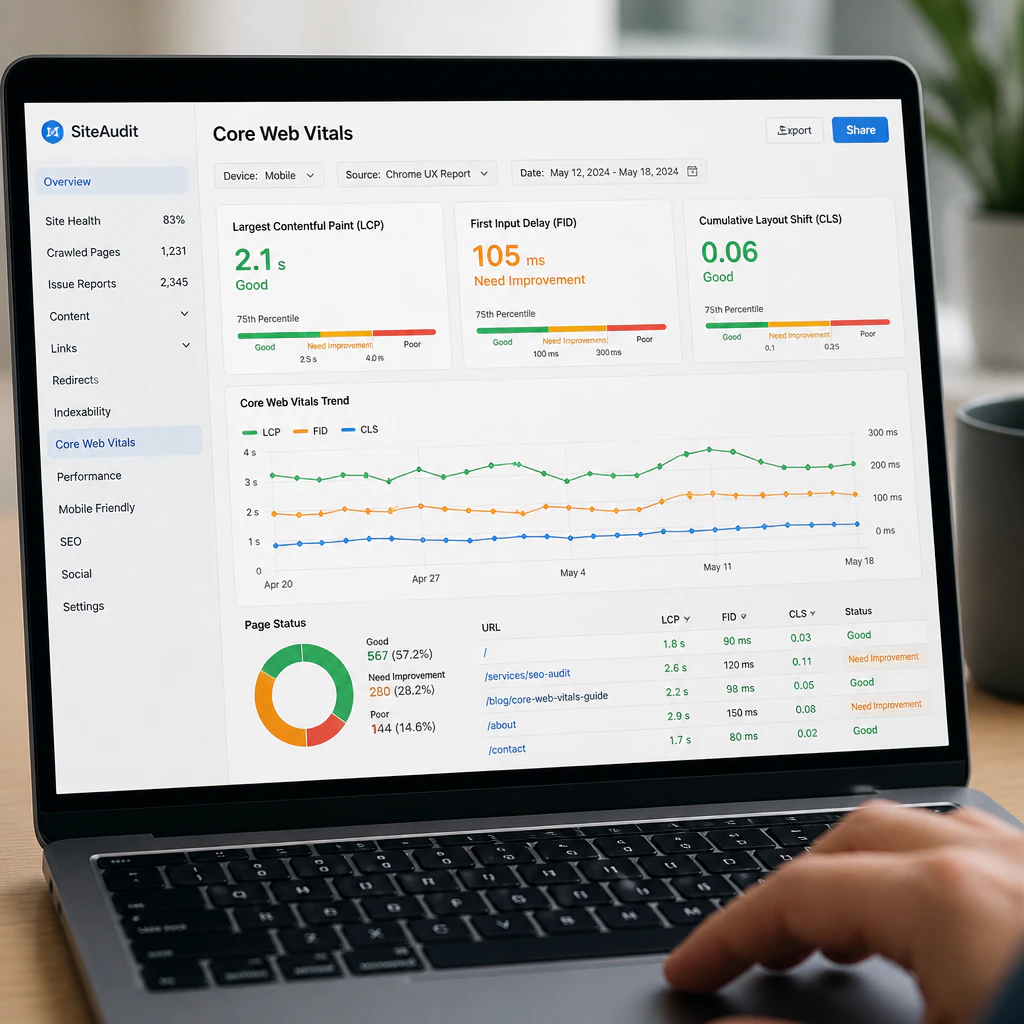
To get the right people in front of your business in that world, you need two strategies working together. You have to create content that is structured and comprehensive enough for an AI system to accurately summarize, and authoritative enough that the AI wants to source it. You also need traditional search engine optimization practices like fast loading times, clean technical website structures, and strong backlink profiles to establish the trustworthiness of the website at the foundational level.
Our SEO work at GOA-TECH is designed to accomplish both. The content we write for clients is both deep and accurate, because AI search systems are more willing to source a page and less willing to paraphrase it when the substance is there. If you’re spending money on affordable SEO packages for your company, make sure that the agency is aware that it’s a two-layered field now.
 Keeping Up With Social Media Without Your Whole Week Falling Apart
Consistent social posting is one of those activities most small business owners acknowledge they should be doing regularly, yet few of them have the bandwidth to do well. The platforms are built for consistency; running a business rarely leaves time for it.
AI tools like Buffer’s AI assistant, Canva’s Magic Write, or stand-alone tools like Lately or Predis.ai help by converting something you have already created (a blog post, a product page, or a video you recorded) into a week’s worth of social media content in one step. It might still need some editing and brand checks before publishing, but the foundation is there, and you haven’t lost the whole afternoon.
For businesses that are investing real money into social media, AI-assisted scheduling and creation help shift where the bulk of the work happens. Instead of spending countless hours on production, the focus can instead go to planning, what message to convey, who to aim your communications toward, and how to build up a following of real people.
Video is still the biggest challenge, but the tools are improving. There are options like Synthesia and HeyGen that allow you to create a talking-head video from a script without any shooting, and software like Descript makes editing recorded video content as easy as editing a Word doc. None of these tools replace full-scale, real-world productions, but for how-tos, product demos, and social clips, they’re genuinely good enough to publish.
Deciding Which AI Tools Fit Your Business
The straightforward response to “what AI tools do I need?” is that it all depends on where the most glaring bottlenecks in your business operations are.
The place to start is one question: where does your team spend time on tasks that are repetitive, rote, or simply processing data that already sits somewhere in your tech stack? That’s your list. Generating the same batch of emails repeatedly. Moving data from one app to the next. Making slight modifications to an existing block of text. Compiling reports from data that you already own.
Pair tools with the places that your business has real friction. A business with a killer email workflow but lagging behind in content production might need to prioritize writing and social media tools first. A business that’s losing leads during non-business hours might need an AI chatbot first. A business with a large volume of manual reporting might immediately benefit from the built-in AI of its analytics software.
GOA-TECH works with businesses of all sizes, helping them with essentials like building functional websites and implementing full-service digital marketing with the right AI tools. If you want an agency that tracks what’s actually working — not just what’s getting headlines — start with a free consultation.